
Origami is a timeless art form that transforms a simple sheet of paper into intricate and beautiful designs. Its origins trace back to ancient Japan, but over centuries, it has evolved into a global practice embraced by hobbyists, artists, and educators alike. Mastering origami requires patience, practice, and an understanding of techniques that allow the paper to come alive in three-dimensional forms. By learning foundational folds, exploring advanced methods, and following structured tutorials, makers can develop skill, creativity, and confidence in their craft.
The Basics of Origami Folds
The foundation of origami lies in understanding its basic folds. These elementary techniques form the building blocks for more complex designs. The mountain and valley folds are essential; one creates a ridge, and the other forms a trough, guiding the shape of the model. Squash folds, reverse folds, and pleats add flexibility, allowing for more dynamic structures.
Learning these basic folds thoroughly ensures that complex designs are approachable. Practicing each fold with attention to precision improves accuracy and enhances the overall aesthetic of the final piece. Beginners benefit from repetition, gradually developing muscle memory and an intuitive sense of how paper responds to manipulation.
Tools and Materials for Success
While origami requires only paper, the choice of materials can influence the outcome. Standard origami paper is lightweight and square, making it easier to fold precisely. Thicker papers may be used for larger models but can be more challenging to manipulate for intricate folds. Specialty papers, such as washi or foil-backed sheets, offer texture, durability, and the ability to hold complex structures.
Tools like bone folders, tweezers, and cutting mats can assist in refining folds, especially in advanced models. While traditional origami encourages using only hands, these tools help maintain crisp edges and perfect symmetry, particularly for designs with repeated or small folds. Selecting appropriate materials and tools lays the groundwork for both skill development and aesthetic refinement.
Step-by-Step Tutorials
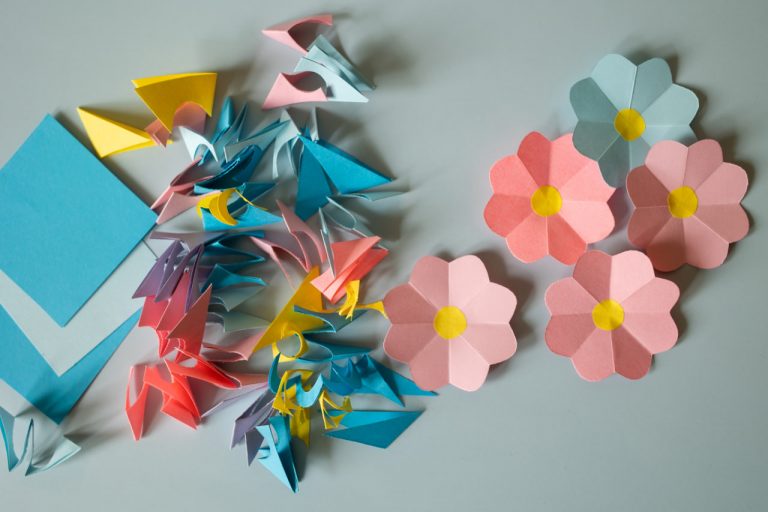
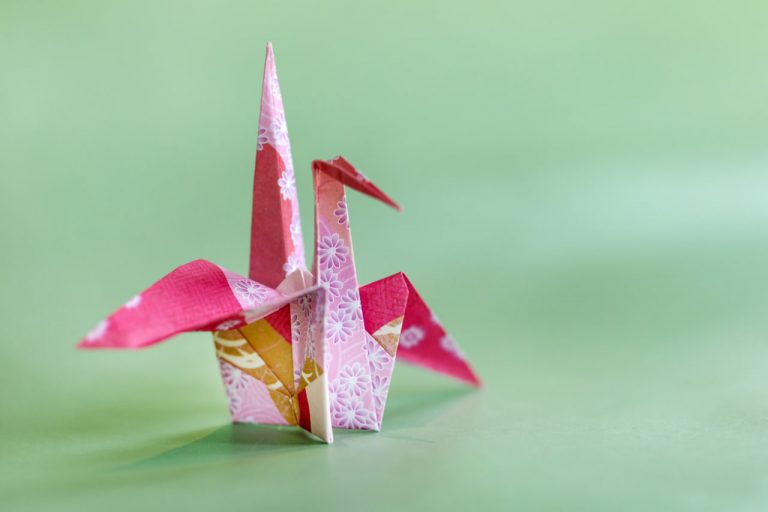
Structured tutorials guide learners from simple to complex designs. Starting with easy models, such as cranes, boats, and flowers, allows students to practice basic folds and understand paper behavior. Each tutorial provides visual instructions, written steps, and tips for maintaining accuracy.
Intermediate tutorials introduce modular designs, where multiple units are folded and assembled to create geometric shapes, stars, or decorative objects. These exercises teach patience, coordination, and the art of symmetry. Advanced tutorials explore complex figures like dragons, insects, or lifelike animals, challenging makers to combine multiple techniques and think three-dimensionally. Following a step-by-step approach ensures gradual progress, builds confidence, and minimizes frustration.
Common Challenges and How to Overcome Them
Origami requires precision, and beginners often encounter challenges such as misaligned folds, paper tearing, or difficulty achieving symmetry. Practicing each fold slowly, using quality paper, and reviewing instructions carefully are essential strategies to overcome these obstacles.
Breaking down complex models into smaller sections helps maintain focus. If a section fails, it can often be refolded or adjusted without starting over completely. Experienced makers emphasize patience and resilience, viewing mistakes as learning opportunities rather than setbacks. Developing problem-solving skills in origami strengthens both technique and creativity.
Advancing Your Skills
Once foundational skills are mastered, advancing in origami involves experimenting with custom designs, combining techniques, and exploring paper sculpture. Makers can modify existing models, create color patterns, or fold unconventional shapes to develop a personal style. Learning from other artists through workshops, online tutorials, or books exposes learners to diverse methods and expands creative possibilities.
Practicing regularly, challenging oneself with new models, and reflecting on successes and mistakes all contribute to skill refinement. As proficiency grows, makers can tackle increasingly complex projects, integrate multiple units into modular designs, or combine origami with other artistic mediums, such as painting, sculpture, or mixed-media art.
Sharing Knowledge and Inspiring Others
Teaching and sharing origami techniques benefits both the instructor and the learner. Demonstrating folds, guiding beginners, and offering constructive feedback reinforce personal understanding while fostering community. Sharing tutorials, videos, or workshops inspires others and encourages the spread of creativity.
Community engagement also provides exposure to new ideas and perspectives. Collaborating on projects, participating in exhibitions, or contributing to online forums helps artists stay inspired and connected. This collaborative approach ensures that origami remains a living art form, evolving with every generation of makers.
Creativity and Expression Through Origami
Beyond technique, origami is a medium of personal expression. Choice of paper, color combinations, scale, and arrangement allows makers to communicate emotion, narrative, and aesthetic sensibility. Artists can create abstract geometric patterns or lifelike representations, each fold reflecting intention and artistic vision.
Exploring creative possibilities encourages innovation and enhances the joy of paper folding. By blending traditional techniques with personal style, makers cultivate a unique voice in their work. The combination of discipline, imagination, and hands-on engagement ensures that origami is not only a skill but a deeply fulfilling creative practice.